
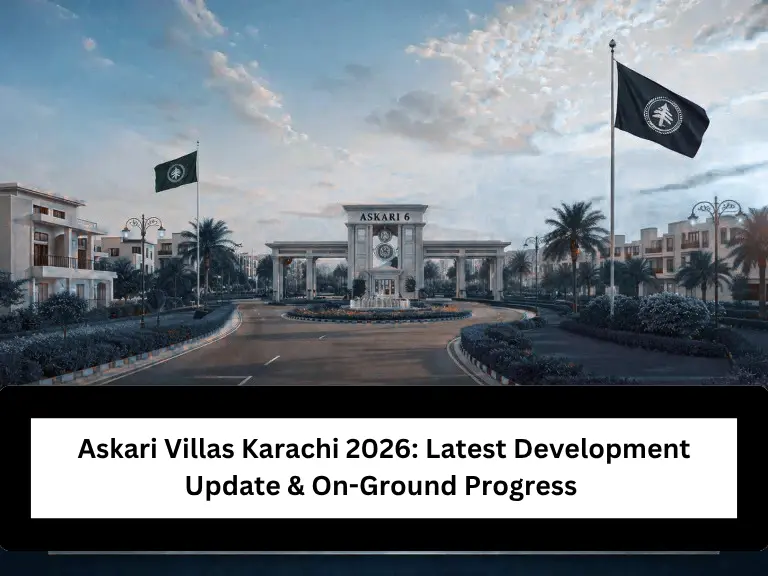
Let’s be real for a second. Askari Villas Karachi Progress updates you read online are often just marketing dressed up as journalism. Upbeat tone, glossy renders of streets that don’t exist yet, a dealer telling you it’s the perfect time to buy no matter when you ask. None of that tells you what one specific street in one specific block actually looks like this week.
So this isn’t that. This is what’s genuinely visible in Askari Villas Karachi right now, in 2026, the roads, the construction, whether the utilities work, and how any of that connects to what a property’s actually worth. A brochure sells you a plan. What matters is what you can use today, since that’s the part that decides whether buying here makes sense for you specifically, not for whoever the brochure was written for.
By the end of this, you’ll know what’s genuinely developed, what still needs your own eyes on it, and how progress actually feeds into value rather than just into a good headline. Bring this with you, mentally, next time you’re on site.
Askari Villas Karachi Progress: Development Status in 2026
People use “development progress” pretty loosely. It should mean something narrower: how much of the planned infrastructure has actually gone up, and how much of it works today. Two different questions that sound almost identical, and a lot of marketing copy relies on you never separating them.
A master plan is not completed development. A road drawn on a map is not a road you can drive on. A plot getting allocated on paper doesn’t mean anyone’s touched that ground yet. Planned is not the same as operational. Sounds obvious once someone spells it out, sure, but plenty of people only learn this the hard way, after they’ve paid for a plot that looked way further along on paper than it actually was.
Development also isn’t even here. Some sections are clearly ahead of others, which is completely normal for anything built in phases rather than all at once. If you can’t verify the exact status of a specific street, don’t guess. Go see it.
One more thing worth knowing: progress doesn’t move on a single track. Roads improve for a while, then utilities catch up, then construction picks up once people trust the area enough to actually build on it. Looking at the Askari Villas floor plan next to the master plan helps you understand how individual plots are supposed to fit into the bigger picture, though again, that’s intent on paper, not proof of what’s actually there.
What Has Actually Improved on the Ground?
Roads and Internal Access
Roads are usually the first thing that visibly changes once a project starts gaining real momentum, and that’s true here as well. Better access cuts down on daily hassle for anyone living there, and it makes construction logistics far easier for anyone building nearby.
That doesn’t mean appreciation is locked in just because the main road looks sharp, though. A nicely paved entrance tells you nothing about the actual street feeding your specific plot. Go drive that route yourself. A photo taken at the gate isn’t representative of anything past it.
Also worth checking how the internal network connects to the world outside the project. A beautifully paved internal grid doesn’t count for much if the approach road into the community is still a mess during rush hour. Comparing the Askari Villas Karachi location against the surrounding main roads gives a much fuller picture than only looking inward.
Construction and Built-Up Areas
Roads only cover half the story. Boundary walls, half-finished houses, material trucks coming and going, that’s what genuine buyer activity actually looks like, not paper files sitting untouched in a drawer somewhere. This matters, because a block can have excellent roads and still have almost nobody actually building on it.
Infrastructure and community are two different things, and people mix them up constantly. A block can be fully paved and still feel like a ghost town if barely anyone’s constructing there. Check both separately. One doesn’t prove the other, no matter how good the drive-through looks.
Comparing sectors helps too. If you’ve heard people bring up the difference between Askari 5 and Askari 6, construction pace usually comes up in that conversation. The older sector often shows heavier activity mostly because it’s had more years to grow, not necessarily because current development is being pushed harder there.
Residential Activity and Occupancy
Actual people living somewhere changes the feel of a place more than most buyers account for going in. More residents generally means better perceived security, more local services running, just a more alive day-to-day atmosphere. It tends to help resale too, since a lived-in area reads as less speculative to the next buyer down the line.
That said, more occupancy doesn’t automatically mean higher value. It’s one factor in a longer list, not proof on its own. Positive sign. Not a guarantee, and it’s worth keeping those two apart in your head.
Occupancy tends to cluster oddly, too. You’ll find a stretch of streets packed with completed, lived-in homes right next to streets that are basically empty. That patchiness is normal at this stage. It’s also exactly why walking the actual block beats forming a general impression from the entrance gate.
Askari Villas Karachi Infrastructure and Utilities
Infrastructure decisions shape daily life more directly than nearly anything else in a project like this. Here’s what actually matters at the property level, not what got announced in some press release months ago.
Electricity
Electricity infrastructure existing somewhere nearby doesn’t mean your property has a working connection. Reliability varies block to block, and newer sections usually lag behind the more established ones. If you’re planning to build or move in soon, confirm your exact connection status yourself. Your neighbor already having power says nothing about your specific plot.
Worth asking, too, how load management and outages typically get handled in the block you’re actually considering, since that shifts even within the same development phase. A short chat with residents already living nearby usually tells you more than any official statement ever will.
Water Supply
Water matters more to someone actually living there than any development percentage ever could. Availability shifts from one section to another, and general project-level planning doesn’t guarantee it reaches every single plot. Confirm this before you finalize anything, particularly if you’re planning to move in soon rather than just hold the plot.
Some residents in newer sections still rely on tankers or private arrangements while the main network gradually extends further into the community. Not unusual for a growing project, but it’s a real cost and inconvenience worth weighing if you plan to live there soon.
Sewerage, Drainage and Other Utility Services
Sewerage, drainage, street lighting, gas, all of it tends to look more sorted in mature sections and patchier in newer ones. These aren’t small details either. They genuinely shape how livable a place actually feels once you’re there day to day. No solid evidence for a particular utility? Flag it for verification instead of assuming it’s handled.
Drainage specifically deserves a closer look if you’re checking a plot during the dry months, since waterlogging problems usually only surface once Karachi’s monsoon arrives. Asking neighbors how a specific street handled the last rainy season tells you more than any brochure will.
Askari Villas Karachi Property Prices and Development
Development tends to build confidence, and confidence tends to drive demand. That relationship is genuine, but it’s not automatic. A more developed area attracts more attention simply because it feels less risky to commit to, and that reduced uncertainty can support demand over time.
Actual sale prices, though, often look nothing like the asking prices dealers throw around. Location within the project matters, and so does the specific property’s condition. Being in a developed area doesn’t mean every plot inside it is priced fairly. Even the strongest sections have their share of properties priced well above what they’re actually offering.
Treat any quoted asking price as a starting point for negotiation, nothing more, until it’s proven otherwise. Worth checking recent commentary on whether Askari Villas property prices are rising too, since price trends tend to move alongside development milestones and general sentiment across Karachi’s property market.
Does Development Affect Property Value?
Development connects to value through a handful of distinct channels, and it’s worth separating them instead of lumping everything under one vague “development is good” idea.
Better roads improve accessibility, which supports practical, everyday demand. Working utilities and visible neighborhood activity improve livability, which matters directly to anyone actually living there. Visible progress raises buyer confidence, and that can smooth out negotiations considerably. Move-in-ready properties attract stronger resale demand, since most end users don’t want to wait years for infrastructure to catch up. And market perception shifts as a project matures, changing how it compares against competing options nearby.
Development still isn’t the only variable, though. Not even close. Location, plot size, street position, corner status, facing, documentation, and the wider Karachi market all factor in as well. Reducing this whole picture to “development equals value” oversimplifies a decision that genuinely depends on several things lining up at once.
Askari Villas Karachi Investment Potential in 2026
Wrong question: is Askari Villas a good investment? Better question: what kind of buyer should even be considering it, and what should they check first?
Short-term investors shouldn’t lean on development headlines at all. Short-term returns come down to entry price, actual market liquidity, buyer demand whenever you’re ready to exit, and transaction costs. Development guarantees none of that by itself, no matter how good the progress photos look.
Medium-term investors can reasonably expect ongoing development to help marketability, but only if genuine end-user demand shows up alongside it. Infrastructure without demand doesn’t move prices much on its own.
End users and long-term buyers should probably weigh actual usability more heavily than speculative appreciation. If you’re planning to live there, a working street with reliable utilities beats a projected growth chart every single time.
One principle worth holding onto here: buy the property, not the development story. A well-told progress narrative doesn’t replace actually doing your homework on the specific plot in front of you. Worth reading about what makes Askari 6 different from comparable projects too, since a lot of the investment case depends on how it stacks up against alternatives, not just how it looks sitting on its own.
Askari Villas Karachi Resale Value
Resale value isn’t just current price plus expected appreciation. Neat formula on paper, sure, but it skips the actual question you need answered: how easily could you find a serious buyer at a fair price if you needed to sell next month?
A handful of things drive that answer. Location within the project, road access, and how developed the surroundings are. Property condition, and how clean the paperwork actually is. Realistic pricing tends to attract genuine interest a lot faster than an ambitious number that just sits there unsold.
A property can carry a high asking price and still have terrible resale liquidity. Check whether comparable properties nearby have actually sold recently. Not listed. Sold. Real transactions tell you far more than active listings ever will.
Resale conversations tend to move faster in blocks with visible construction activity too, simply because buyers can picture themselves living there sooner. A vacant, undeveloped stretch takes longer to sell even at a fair price, because it asks the buyer to imagine more of the future themselves instead of just walking in and seeing it.
Is Askari Villas Karachi Becoming More Suitable for End Users?
Investment readiness and residential readiness get treated as the same thing constantly, and they’re not. A project can attract investor interest long before it’s genuinely comfortable for a family to actually live in day to day.
Road usability, working utilities, visible construction, general neighborhood activity, all of it feeds into residential readiness. Nearby services and basic upkeep matter too, since they shape how practical daily life feels once you’ve actually moved in. The more established parts of Askari Villas seem closer to that point than the newer sections do, which honestly tracks with how most phased projects grow anyway.
Planning to move in soon? Take this gap seriously. It affects your actual, everyday experience, not just some abstract long-term value number on a spreadsheet. Families with school-going kids or older parents especially should weigh proximity to working amenities over any growth projection, since day-to-day convenience is what you’ll actually feel once you’ve settled in.
Which Areas Should Buyers Examine More Carefully?
“Location matters” isn’t useful advice by itself. Here’s something you can actually act on instead.
Plot-specific things worth checking: street location, road width, corner position, park-facing or main-road-facing status, and what’s happening on the plots around it. A row of vacant lots next door changes the picture more than most people expect going in.
Development-specific things: road condition, drainage, electricity, water, street lighting, general access, all checked at the exact plot, not guessed at from the entrance a mile away.
Commercial things: current asking price, what comparable nearby properties are actually going for, realistic resale demand, and the transfer process. Run all three together as one checklist instead of treating them like separate boxes to tick.
Worth asking a plain question about safety and general security while you’re at it too. If you’ve come across discussions on whether Askari Villas 6 is safe, treat that the same way as everything else here, something to check for yourself rather than accept from a single source.
Askari Villas Karachi Progress vs Project Marketing
Marketing material typically shows master plans, future facilities, proposed roads, planned commercial zones. All of that represents intent, not current reality, and buyers need a clean way to tell the two apart.
A simple framework does the job here: planned, under development, operational, needs verification. Run roads, utilities, and facilities through those four buckets and you get a far more honest picture than any rendering could ever give you. It also stops you assuming a proposed facility already exists just because it showed up in a promotional video somewhere.
Before taking any specific claim at face value, checking the Askari Villas master plan against what’s actually on site is a reasonable first move.
What Buyers Should Verify Before Purchasing
Time to turn all of this into something actionable. Before committing any money, work through the following.
Verify ownership and documentation yourself, not through a dealer’s summary of it. Verify development status directly, since photos and ads keep getting reused long after actual conditions have changed. Inspect the exact street, because developed and undeveloped pockets sit right next to each other far more often than you’d think.
Check utilities at the actual property, not somewhere nearby that merely looks similar. Compare asking prices against real market activity, and talk to more than one source before trusting any single figure. Check whether comparable properties have genuinely sold recently, not just been listed for months without moving.
Confirm the transfer procedure and every cost tied to it before making an offer. Visit at different times of day too, since traffic, access, and general activity can look completely different in the morning versus the evening. Verify current approvals rather than trusting an older claim you stumbled across online somewhere. And get current information right before you pay, because conditions genuinely shift within a matter of months.
Worth reading up on the Askari Villas Karachi developer too, just to understand who’s actually responsible for delivering on all of this. Also worth going through the current Askari Villas payment plan closely, since installment structures and any link between payments and development milestones can affect how much financial risk you’re actually taking on.
What Askari Villas Karachi Progress Means for Buyers in 2026
Development means something slightly different depending on who’s asking.
End users care about usability above everything else. A livable street with working utilities beats a projected growth chart, full stop.
Long-term investors do get real benefit from visible progress, but price and actual demand still decide the outcome in the end.
Short-term investors can’t rely on development alone. Liquidity and entry price carry far more weight than any single progress update ever will.
Resale buyers should stick with properties that have practical access, visible activity around them, and pricing grounded in actual comparable sales rather than optimism.
Across all four groups, Askari Villas Karachi Progress works as a useful signal. It’s never a substitute for doing your own homework, though, no matter how strong the signal looks.
Askari Villas Karachi Progress 2026: Overall Verdict
Development in Askari Villas Karachi shows real, checkable progress this year. Roads, construction, and utility infrastructure have moved forward across several sections, and some areas clearly feel more established than others at this point.
A few things still deserve caution, though. Development remains uneven across blocks, and utility availability needs confirming at the property level, not assumed from the project as a whole. Asking prices don’t always reflect realistic resale value, and no amount of marketing material replaces an actual physical visit.
Bottom line: development is a positive sign, not the entire investment case. Weigh current progress against price, documentation, resale demand, and what you actually plan to do with the property before handing over any money. A site visit remains the one step nothing else can replace, no matter how thorough the paperwork looks.
FAQs
Q1: Okay, so what’s actually going on with Askari Villas Karachi Progress in 2026?
Ans: Roads, construction, and utilities have all moved forward in several sections, just not evenly across the whole project.
Q2: Is the entire project finished by now?
Ans: Not even close, no. Development varies a lot by area and even by individual property. Some sections feel genuinely established, others are still handling the basics.
Q3: Could someone actually live here right now?
Ans: In the more developed sections, yes, reasonably comfortably. The newer parts might need a bit more time before they feel properly residential.
Q4: Does development actually push prices higher?
Ans: It can, mainly by boosting buyer confidence and demand. But it’s not a guarantee, since price also depends on location, condition, and how the broader market’s doing at the time.
Q5: And resale? Does progress help there too?
Ans: Usually, yes, mostly because it’s easier to sell a property to an end user once the area feels lived-in. Resale still comes down to realistic pricing and whether similar properties are actually finding buyers.
Q6: Is this actually a good time to invest?
Ans: Depends on price, location within the project, documentation, current development, and how long you’re planning to hold. No single answer fits every buyer or every plot here.
Q7: What should I check before I actually pay for anything?
Ans: Ownership documents, current development status, utility availability at your specific plot, real resale activity nearby, and the transfer process. None of it replaces going and looking yourself.
Q8: How do I tell real progress apart from marketing spin?
Ans: Separate what’s planned from what’s actually operational. A site visit beats any brochure or rendering, no exceptions.