Askari Villas Plot Buying requires careful verification before making any payment. Buyers should confirm whether plots are actually available, check the latest asking price, verify the exact location and review the relevant property documents. These checks can help distinguish genuine plot offers from completed villas or resale properties.
This guide walks you through what to check before you pay a token or booking amount. I cover sizes, listed prices, payment terms, location, maps, the master plan, NOC checks and documents. My research stops at 27 October 2026. Every price below is an advertised figure, not a confirmed sale.
What Is Actually on Sale Under Askari Villas Karachi?
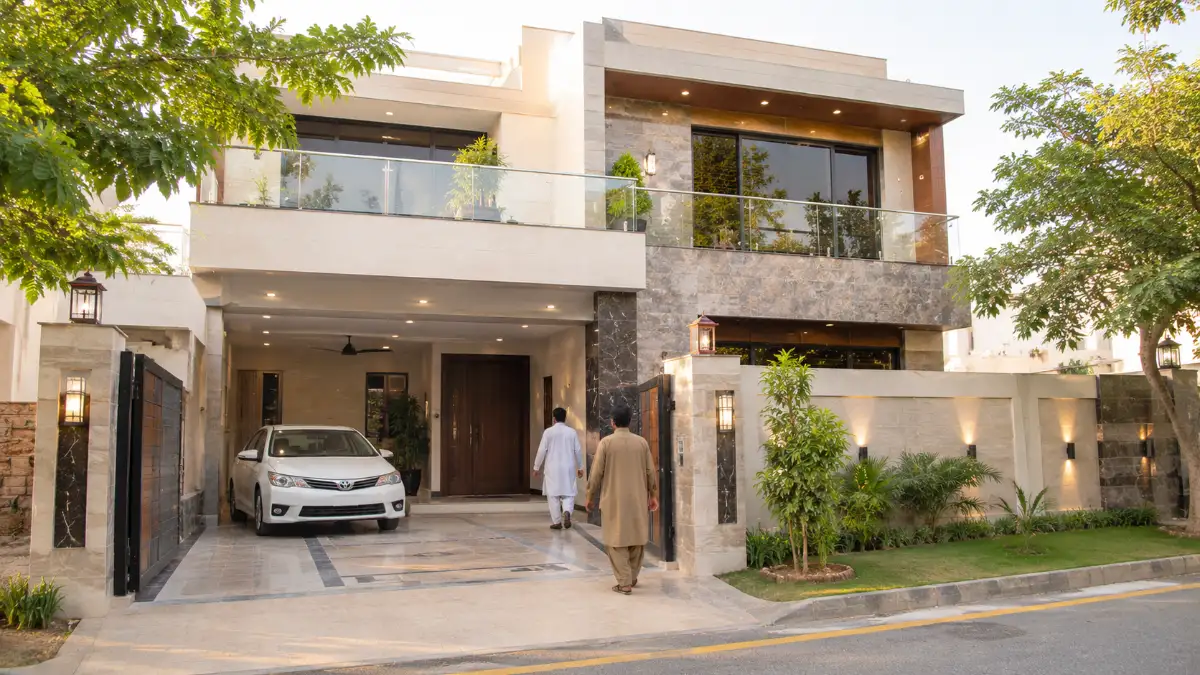
I checked listings on Zameen and Lamudi for Askari VI, which sits beside Malir Cantonment. Almost everything I found was a house or villa. Some are ready, some are still under construction, and many are resale offers from dealers. One Zameen listing offers villas on booking with an expected handover between 2029 and 2030.
What I did not find was a dated, identifiable offer for a vacant plot. That doesn’t prove plots are unavailable. It only means my search didn’t confirm them. So if you’re set on Askari Villas plot buying, treat any plot offer as a separate deal and verify it from the start.
Before you compare anything, write down the basics for each offer:
- The project name used in the advertisement
- The property type: plot, villa, under-construction unit or resale house
- The unit or plot number, plus the block or street
- The documented area and dimensions
- Proof that the property is available today
- The seller’s authority to sell it
Also, don’t assume that Askari Villas, Askari VI and similar names describe one property. For background on the project, read the developer overview and the about us page. Both are developer-published, so read them as the developer’s own account.
Plot Sizes and Property Dimensions
A size label rarely identifies a property on its own. “270 yards” could mean a plot, a built villa or just a sales category. In practice, you need the written area, the dimensions and the unit number, and all three should match the paperwork.
Recent portal listings mention several sizes. I saw 270 square yard villas, a 300 square yard house and 375 square yard houses. These are advertised sizes only. I couldn’t match any of them to a recorded document, so none counts as verified.
Use this table when you talk to a seller.
| Property detail | What to verify |
| Property type | Vacant plot, villa or another unit |
| Advertised size | Written area and dimensions |
| Unit number | The same number on every document |
| Block or street | The same name on the map and the papers |
| Current availability | A dated written confirmation |
| Supporting documents | Records that name this exact property |
The floor plan page shows the project’s layouts. Still, a floor plan is a design. It can’t tell you whether the unit in your advertisement was built that way.
Askari Villas Property Prices and Listed Figures
Two ads for the “same” villa often carry different prices. Size, condition, resale status, unpaid dues and the age of the quote can all explain the gap. That’s a list of possibilities, though, not a fact about every listing.
It helps to separate five price types. A developer rate comes from the project. A dealer quotation comes from an agent. A portal price is what a seller asks. A negotiated offer is what two people discuss. A completed transaction price is what a buyer actually paid. Portals give you the second and third types at best.
On 27 October 2026, the market-listed figures I found were:
- A 270 square yard villa at PKR 7.29 crore, with PKR 2 crore as the initial amount (Zameen)
- A second 270 square yard villa at PKR 7.49 crore, with PKR 1 crore initial (Zameen)
- A 375 square yard house at PKR 7.85 crore, and another at PKR 8 crore (Zameen)
- A 300 square yard house at PKR 7 crore (Zameen)
The spread is wide because the listings aren’t alike. Some are new bookings and some are resale. Even the build years differ. For that reason, don’t average the numbers and don’t call any of them the market rate. Ask the seller for a dated, itemised quotation for the exact unit instead.
One more thing. Many ads repeat the same sentence about steadily rising values. When wording is copied across listings, it isn’t independent evidence of anything. If you want the project’s own view, the post on whether Askari Villas property prices are rising gives it. Read it as a developer opinion, not as proof.
Payment Terms and Your Total Buying Cost
Start by asking what kind of deal this is. A new booking follows the developer’s schedule. A resale property follows whatever the owner and the developer agree. Never assume a resale unit comes with a developer instalment plan.
When a written schedule exists, ask the seller to break it into pieces. You want the booking amount, any confirmation payment, the monthly or quarterly instalments, balloon payments and possession charges. Add transfer charges, outstanding dues and taxes to that list. Then ask which discounts apply and under what conditions.
Here’s the formula I use:
Total buying cost = verified property price + applicable charges and dues minus confirmed discounts
Two Zameen listings let me test it. Both are advertised figures, so read these as examples of method, not as quotes.
The first listing shows PKR 2 crore down, PKR 8.5 lakh a month for 36 months and a PKR 2.23 crore possession fee. The sum is 2.00 crore plus 3.06 crore (8.5 lakh × 36) plus 2.23 crore, which gives 7.29 crore. That equals the advertised price.
The second shows PKR 1 crore down, PKR 9 lakh a month for 36 months and one balloon payment of PKR 3.25 crore. Here the sum is 1.00 crore plus 3.24 crore (9 lakh × 36) plus 3.25 crore, which gives 7.49 crore. Again it matches.
Neither listing mentions transfer charges, taxes or other dues. Therefore, call any total built from them incomplete. Compare the figures with the project’s payment plan page and with your own written quotation.
For a resale, ask for a current dues statement and the transfer conditions in writing. Before sending money, confirm the recipient through an official channel. A WhatsApp message from a dealer doesn’t count as one.
Askari 6 Location and Access
A locality description tells you where an area is. It says nothing about where your villa stands. Listings place Askari VI next to Malir Cantonment, and one advertisement mentions airport connectivity. I couldn’t verify any distance or travel time, so I won’t quote one.
To confirm the Askari 6 location of a specific property, follow this order. First, get the full address. Next, match it to the unit number in the advertisement. Then check a project or official map and compare it with the documents. If you can, visit the property. Finally, settle every mismatch before you pay.
Phrases such as “prime location” or “minutes from everything” should make you ask for an address. They describe a mood, not a place. The location page offers general directions, and that’s all it can do. A location page can’t prove that a seller owns a particular unit.
If you’re comparing neighbouring societies, two posts may help. One covers the difference between Askari 5 and Askari 6. The other explains what makes Askari 6 different. Both come from the developer’s own site.
How to Check the Askari Karachi Map and Askari Map
A map is only useful if it helps you find your property. So begin with who published it and when. An image with no publisher and no date is closer to a brochure than a map.
Then compare the Askari Karachi map with your documents, line by line. Look at the unit number, the block or street name, the dimensions, the access roads and the map’s revision date. Each of these should agree with the seller’s paperwork.
Many portal listings carry a pin labelled “Askari 6 Map.” That pin marks an area. It rarely marks your exact unit. If you can’t find the unit on the Askari Map you’ve been given, tell the seller and ask for a dated, published version. Please don’t guess a position from a sample image.
Suppose an older map conflicts with a newer record. In that case, ask the record-holder for a written clarification and keep the reply with your files. Verbal assurances have a way of disappearing.
What the Master Plan Can and Cannot Confirm
A master plan shows the intended layout, including roads, parks, facilities and clusters of villas. The developer’s master plan page is project-published. Check its date and revision before you rely on it.
However, a drawing can show a school that nobody has built. The Master Plan doesn’t prove that a road exists, that a facility is finished or that your unit has been handed over. Nor does it prove approval. Ask whether you’re looking at a marketing illustration, a project-issued layout or an official layout, because each carries different weight.
Next, try to place your unit on it. If the plan and your documents use different block names or numbers, pause and ask for a written explanation. The facilities and amenities page lists what the developer says it offers. Treat those items as developer-stated until you’ve seen them yourself.
NOC Verification Before Buying
Approval is specific to a property. When a seller says the NOC is clear, that’s a claim, not a record. So first establish the property’s identity and jurisdiction. After that, find the competent authority and ask it, or a qualified lawyer, to confirm.
On any approval document, check the project name, the phase or block, the date and the scope. Look for conditions or limits too. Most important, check that your unit falls inside that scope.
Approval for one phase doesn’t automatically cover another. Likewise, a document naming one project doesn’t cover a similarly named project nearby. My research didn’t confirm an NOC for any specific unit, so I make no approval claim in this guide. Where the evidence stays unclear, call the status unverified and keep asking.
The post on whether Askari Villas 6 is safe gives the developer’s viewpoint on safety. Read it if you like, then confirm the legal side independently.
Property Documents and Ownership Verification
No single list fits every deal, so build one for your own transaction. Depending on the offer, you may need the seller’s identity and proof of authority to sell. You may also need booking or allotment papers, unit identification, ownership and transfer records, payment receipts, a dues statement and a written quotation. Add layout or approval records, transfer conditions and the cancellation and refund terms.
Each document answers one question and no more. A receipt doesn’t prove ownership. A map doesn’t prove approval. A seller’s national ID card doesn’t prove authority over the unit. So compare the papers with each other and look for gaps.
For ownership verification on a high-value or messy deal, hire a qualified property lawyer before you pay. The fee is small next to the cost of a dispute. If you need to ask the project office something, use the contact page and keep a copy of the reply.
Warning Signs Buyers Should Not Ignore
An unclear offer isn’t automatically fraud. It’s a reason to ask more questions. These are the signs I’d watch, with a next step for each.
- The property type doesn’t match the documents. Ask for a corrected written description.
- The unit number is missing or changes. Request the exact number and find it on the map.
- Block names conflict across records. Ask the record-holder to clarify in writing.
- Approval is claimed without a document. Ask to see the record and read its scope.
- The quotation has no date. Request a dated, itemised version.
- Extra charges appear late. Ask for a full statement before you agree.
- The payment account can’t be confirmed. Verify the recipient through an official channel.
- You’re pushed to pay before checks. Slow down, because a genuine seller can wait.
- Transfer or refund terms are vague. Get them in writing.
- Possession claims have no evidence. Ask for dated photographs or inspect in person.
Keep your tone calm and factual. Don’t accuse a named seller of wrongdoing without proof. Simply decline to proceed until the gap closes.
Step-by-Step Askari Villas Property Buying Checklist
For any Askari Villas Karachi property for sale, I’d work through these steps in order:
- Confirm whether the offer is a plot, a villa or something else.
- Identify the exact project and location.
- Get the unit number and documented dimensions.
- Request a dated, itemised quotation.
- Collect the relevant map and supporting documents.
- Verify approval records independently.
- Calculate the total buying cost.
- Confirm outstanding dues and transfer requirements.
- Inspect the property where practical.
- Arrange a professional review if the deal is complex.
- Verify the payment recipient and method.
- Keep signed documents, receipts and correspondence.
These steps cut down avoidable risk. They can’t promise a risk-free purchase.
Final Thoughts on Buying Askari Villas Property
Buying Askari Villas Karachi property for sale goes better when you slow down. Identify the exact unit, confirm it’s really available and get a dated price in writing. Check the size, location and map position. Then match the approval record to your specific property, work out the full cost and read every document before any money moves.
Portal prices show what sellers hope to receive, not what buyers paid. If something doesn’t add up, ask for a written answer and wait for it. Sometimes the right call is to walk away, and that counts as a successful check.
Frequently Asked Questions
Q1: Are plots currently available in Askari Villas Karachi?
Ans: I couldn’t confirm dated vacant-plot offers under this name. Current listings mostly show villas and houses. If a seller offers a plot, ask for the plot number, written proof of availability and the documents that identify it.
Q2: What is the current Askari Villas price list?
Ans: I didn’t verify one official list. Portal asking prices for 270 to 375 square yard properties sit roughly between PKR 7 and 8 crore. Ask for a dated quotation on the exact unit, and remember that an asking price isn’t a sale price.
Q3: How can I verify the Askari 6 location?
Ans: Match the full address to the unit number, then compare both with a dated map and your documents. A site visit adds confidence. A general area description alone can’t confirm where a property sits.
Q4: How can I check the Askari Map?
Ans: Find the publisher and date first. After that, compare the unit number, dimensions, block or street and access roads with your papers. If your unit is missing, ask for a newer map in writing.
Q5: What does the Master Plan prove?
Ans: It shows the intended layout. It doesn’t prove completion, handover or approval. Pair it with records that name your specific property.
Q6: How can I verify the NOC?
Ans: Establish the property’s jurisdiction, then ask the competent authority or a lawyer to confirm. The record must name the right project, phase and area.